
Dairy
LAND For the past 200 years, dairy has shaped Vermont’s agricultural landscape. While the number of dairy farms has been steadily declining since the 1950s, dairy is still Vermont’s largest agricultural product by volume, and dairy farms still utilize about 80% of the farmland in the state.
LABOR As of 2016, there are an estimated 1,000 – 1,200 Latinx migrant dairy workers, 90% of whom are likely undocumented. Read the Justice & Liberation story to learn more.
ANIMALS Vermont’s approximately 600 cow, sheep, and goat farms produce about 2.3 billion pounds of milk a year, 85% of which is exported to other states. Outside the US, people use milk from other animals including yaks, reindeers, horses, camels, donkeys, and buffalos.
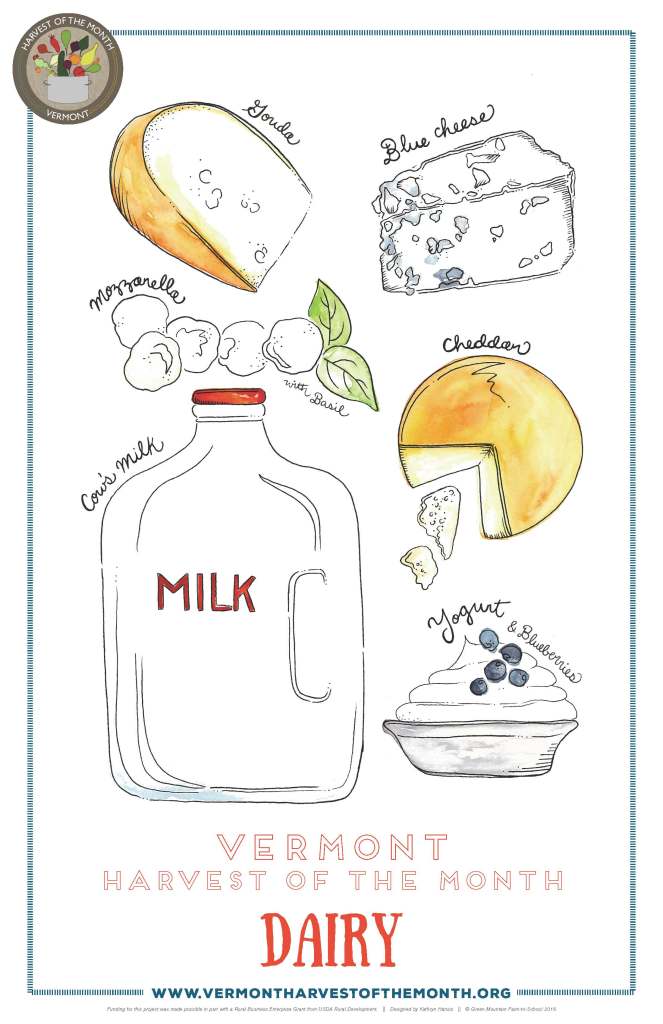
PRODUCTS Vermont is home to many cheese, yogurt and butter producers. These are all milk-based foods, along with ice cream, sour cream, and whole, low-fat and flavored milks.
Around the world, people enjoy milk in different ways and from different animals. In Central Asia, Turkey, and the Middle East people drink a cold, fizzy, salty yogurt drink called Ayran or Doogh. In Kazakhstan, a popular traditional health drink is fermented horse’s milk. In South America, a popular dessert ingredient is called dulce de leche.
Many people can’t digest lactose (a sugar in milk). There are many alternatives, such as nut milks, or eating low-lactose foods like cheese and yogurt. These are both easier to digest for people with lactose intolerance.
 Charlotte Seed Library